Hurricane Plumbing Prep: How to Shut Off Your Home’s Water & Water Heater (Step-by-Step)
When a hurricane is on the way, a few minutes of plumbing prep can save you thousands in water damage. In this guide, Pirates Plumbing shares exactly how to find and test your main water shut-off and how to safely shut down your water heater—whether it’s electric or gas—so you can ride out the storm with confidence.
Serving homeowners across Pinellas County, including Palm Harbor, Clearwater, Dunedin, Tarpon Springs, and the greater Tampa Bay area.
Safety Reminder: If anything feels unclear or you sense a gas odor, stop and contact a licensed professional immediately. Your safety comes first.
Why Shutting Off Water Matters in a Hurricane
High winds and flying debris can break supply lines, topple equipment, or knock out power. If a pipe bursts or a valve fails while you’re away or sheltering in place, the fastest way to limit damage is to close the home’s main water valve and make sure your water heater is shut down safely. This protects your plumbing from pressure spikes and prevents your water heater from running without adequate water (a dangerous scenario).
How to Locate & Test Your Main Water Shut-Off
Your main shut-off valve is typically where water first enters the home. Common locations include:
- Exterior wall facing the street (near a hose bib or spigot)
- Garage or utility room on the street-side wall
- Ground box at the property line near the sidewalk or meter
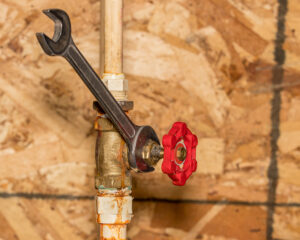
What the valve looks like: Most homes have either a ball valve (lever handle) or a gate valve (round wheel).
- Ball valve: 1/4-turn lever. Inline = ON. Perpendicular = OFF.
- Gate valve: Turn the wheel clockwise until it stops. Don’t overtighten—snug is enough.
Step-by-Step: Testing Your Main Shut-Off
- Choose a faucet inside the home (like a tub) and run cold water.
- Close the main valve (lever perpendicular for ball valve; turn wheel clockwise for gate valve).
- Watch the faucet. The flow should slow and stop after a few seconds.
- Check for leaks around the valve. If you see drips or seeping, note it for repair.
- Reopen the